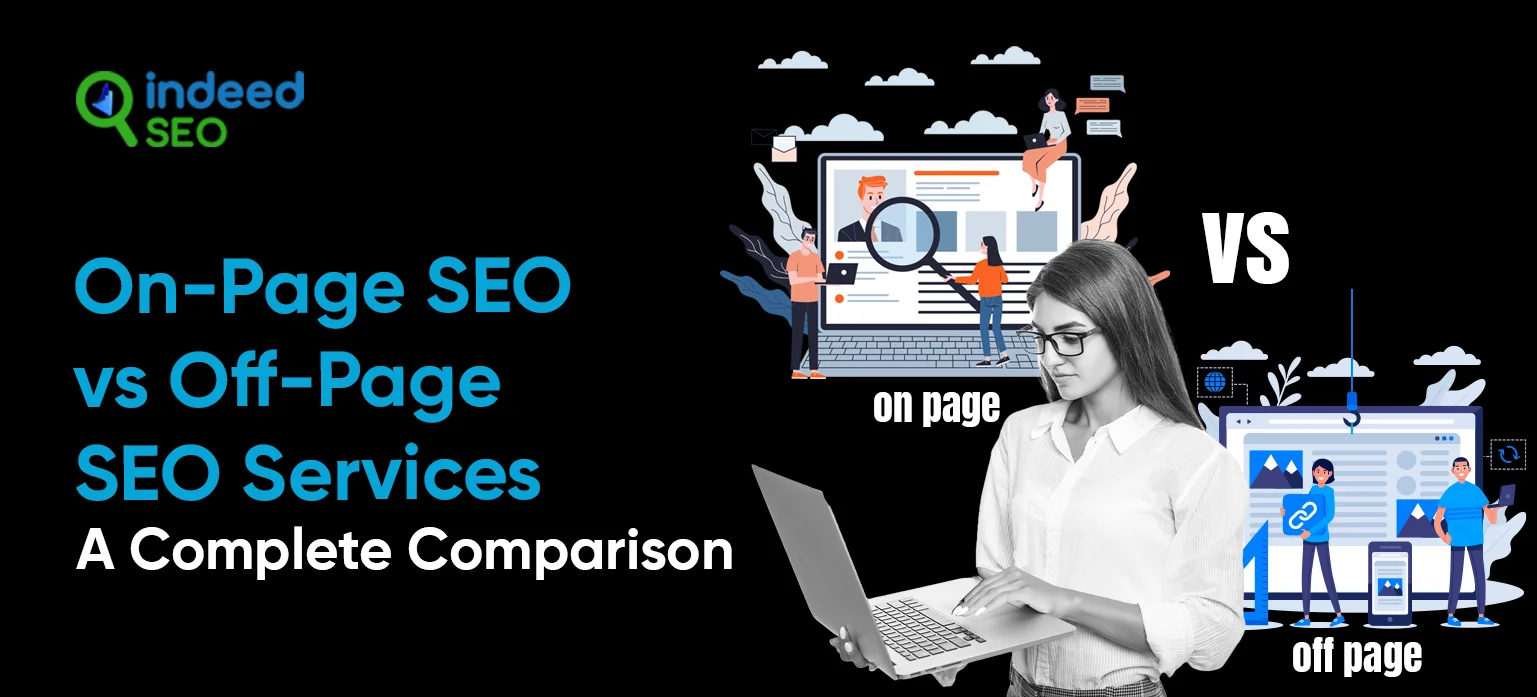
Increasing your visibility starts with mastering what’s happening on your website and what’s happening outside of it. Search Engine Optimization is a complete process that simplifies your brand for a better user experience, thereby ranking higher. On-page and off-page SEO are its two domains. Both are important, but they work differently.
On-page SEO focuses on the quality and structure of a brand’s content. Off-page SEO focuses on your brand’s market credibility. In this blog, we will compare on-page vs off-page SEO services in detail and help you choose the right strategy for your business.
What is On-Page SEO?
On-page SEO is a technique that works by simplifying brands and websites. This helps add quality content and rank organically. When pages are optimized and fast, search engines understand them more efficiently. With efficient brand optimization, businesses can streamline their performance for a better user experience.
On-Page SEO Elements
Quality Content
Quality content shares useful information that helps readers. It provides clear value in simple words.
Keywords
Keyword usage means placing phrases naturally in your titles and text. This helps search engines understand your page.
Meta Tags
Meta tags include strong titles and clear descriptions for each page. They increase visibility in search results.
Internal Links
Internal links are used to connect your websites for better content flow. This helps users browse your site smoothly and discover various services.
Page Speed
Page speed ensures your website loads quickly on all devices. Fast pages keep users engaged.
Mobile Compatibility
Mobile compatibility is important to keep your users engaged. This helps in fast loading, and the smooth layout enhances the user experience.
Benefits of On-Page SEO
- Control how your website is presented online
- Improve user experience and readability
- Improved rankings for industry-specific keywords
What is Off Page SEO?
Off-page SEO focuses on your brand’s credibility in the market. The main goal of off-page SEO is to make your brand trusted and appreciated by others. This is done by finding the right partners in the market and connecting their services to brand collateral.
Key Elements of Off-Page SEO
Link Building
Backlinks are used to build your network in the market. These are high-quality links that come from trusted websites. They help build your site’s authority.
Social Media Presence
Social media presence is very important to become popular digitally. This includes shares, likes, and mentions on social platforms for better visibility. They increase your brand’s online engagement.
Brand Mentions
Brand mentions are online references to your business across the web. They help increase your visibility and trust.
Guest Post
Guest posting means publishing an article on another website for exposure. This helps bring new readers to your brand.
Review
Reviews are user ratings posted on Google or review sites. They build trust and influence customer decisions.
Benefits of Off Page SEO
- Make your brand a trusted service provider.
- Helps increase website popularity.
- Rank higher for competitive keywords.
On-Page vs Off-Page SEO: What Makes the Difference
Tools for On-Page SEO
- Google Search Console report indexing issues and search activity.
- Google Analytics provides insight into user paths and behavior.
- Screaming Frog detects missing tags, errors, and duplicates.
- Yoast SEO supports better on-page optimization.
- Math Ranking evaluate keyword usage and content quality.
- SEMrush Site Audit uncover deeper technical issues.
- Ahrefs Site Audit reveal performance and SEO gaps.
- Surfer SEO recommend keyword placement and content formation.
- grammar ensure writing is clean and easy to read.
- Page Speed Insights assess loading speed and technical delays.
Tools for Off-Page SEO
Off-page optimization tools help make online businesses credible, strengthening trust and overall digital presence. The best tools can build your authority beyond your website and drive long-term ranking success. This essential guide to Off-Page SEO strategy ensures you stay ahead with smarter, more impactful optimization.
- Ahrefs Backlink Checker analyze your link profile and link strength.
- Semrush Backlink Audit flag toxic links and weak sources.
- Moz Link Explorer measure authority and link expansion.
- BuzzSumo identify viral posts and leading influencers.
- HARO connects you with reporters for media coverage.
- Google Business Profile improve your local rankings and reviews.
- Social tools like Meta Sequence And Buffer organize posts and engagement.
- pitch box handling outreach campaigns and guest posting.
- Hunter.io find verified email contacts.
- Brand24 monitor mentions of your brand across platforms.
Conclusion
SEO is a strategy that can shape your online presence. In short, On-page SEO builds a strong base for your brand using quality content and in-depth market gap research. Meanwhile, Off-page SEO ensures that your brand earns users’ trust through backlinks, reviews, and quality mentions from the web.
If both strategies support each other, your site will rank better and attract more users. With IndeedSEO, you can benefit from expert SEO optimization and make your brand an industry leader. Partner with a leading SEO company and improve your brand ranking online!

FAQs
- Is SEO important for brands?
Yes, SEO is an important organic strategy for keeping your business visible online.
- Are both types of SEO important?
Yes, both on-page and off-page are very important for overall business optimization.
- Is it important to keep the quality of your content high?
Yes, strong content guides most of your results. It is important to keep your quality high and use ranking keywords for better visibility.
- Does site loading speed affect search results?
Yes, slow or unstable mobile pages can lower your rankings.
News
Berita
News Flash
Blog
Technology
Sports
Sport
Football
Tips
Finance
Berita Terkini
Berita Terbaru
Berita Kekinian
News
Berita Terkini
Olahraga
Pasang Internet Myrepublic
Jasa Import China
Jasa Import Door to Door